Sunday, 11 April 2021

April


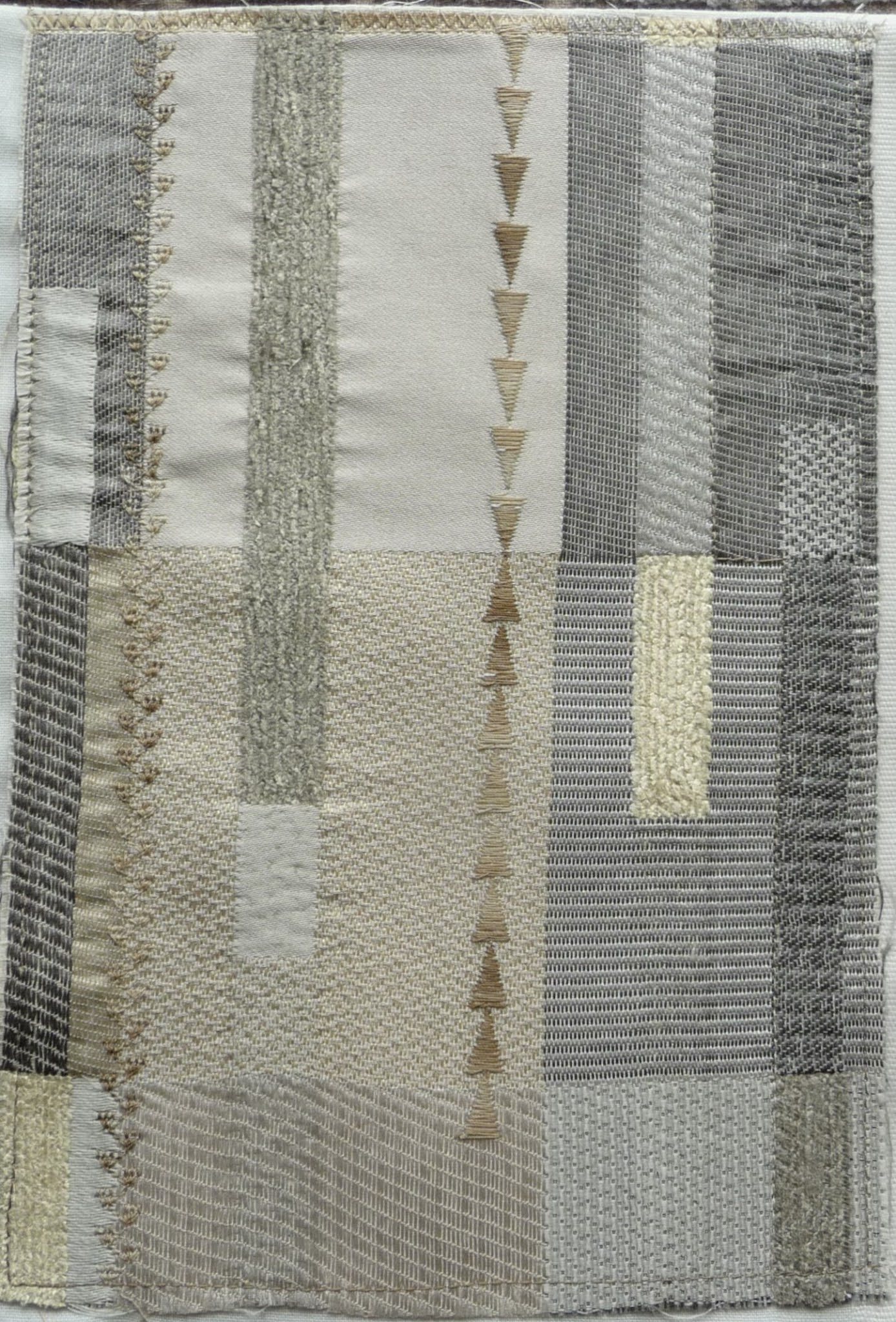
Neutral Colours


What is a neutral colour?

Neutral colours are most clearly defined as hues that appear to be without colour, and don’t typically appear on the colour wheel.  Neutral colours do not compete with primary and secondary colours .  They compliment them.


Why use neutrals?

They help other fabrics to stand out.  They can make a vibrant, wild palette look soft and airy, or add depth and dimension with out adding colour.  They can round out a palette making it look more complete and dynamic.


How to start?

Begin by paying attention to the undertones of the neutrals.


Undertones?

Beiges are the warm neutrals and generally go well with warm colours and earth tones.  Beiges will have pink, green, or yellow undertones.


Grays range from light, hazy gray to rich charcoals.  These cool neutrals come to life with vibrant, clear colours.  They will have violet, blue or green undertones.


Taupe is a combination of gray and beige, leaning toward gray, and can be both cool and warm. They will have pink or violet undertones.


Be deliberate with Value

If you want a serene, soft, elegant or understated look, use whites, creams, taupes and light grays.


For a more dramatic, bold, moody or attention grabbing quilt use more blacks, dark browns or charcoals.


Add harmony by choosing a warm neutral for a mostly warm palette, or cool neutral for a cool palette.


Create balance by adding a warm neutral to a cooler palette, or a cool neutral to a mostly warm palette.


At our upcoming meeting I will share with you two ‘Boho’ embellishments I came across during a stroll through You Tube.


I will have samples for you to see and explain some of the changes I made to the processes.  These changes came about because I didn’t have the materials suggested, or didn’t want to follow instructions! 


Chrissie Crosser, You Tube “How I make my Boho Beads” (22:16 minutes)   Chrissie uses a paper straw as the foundation of her bead.  She then uses a method to anchor the wire that the rest of the bead is built on.  I wasn’t comfortable with her method, and will describe some of the changes I made.  No doubt you will have modifications once you view the You Tube tutorial…or once you have made your own bead.  My granddaughters and I made a few beads together…its an easy and enjoyable process! 


https://www.youtube.com/watch?v=YHCVyYuO_rQ


Nina Ribena, You Tube “Boho Gypsy Tassel Tutorial Using Grandma’s Thimbles” (28:14 minutes)  I loved the sight of this tassel the moment I saw it. Again, another session with the granddaughters, and again, this was fun and easy too!  There are a variety of ways to embellish the tassel…watch the video and come up with a few suggestions for our meeting next Tuesday!


https://www.youtube.com/watch?v=k8ndbxumAxA


Cathy


Cathy has done some lovely flower embroidery and made a large tassel than hangs on her bedroom wardrobe.


Embroidered Wild Flowers by Kazuko Aoki


Cathy used some of our previous dyeing adventure fabrics in this neutral diamond, dyed with coffee, tea, rust and maybe avocado?


This beautiful piece was inspired by string art Cathy saw recently.  You remember the ones made with wood, nails and string?  Well, you can certainly do it with fabric, beads and thread!


Linda has been busy making a bunch of books and played around with decorating playing cards.


She has also been eco dyeing yarn, this one with marigold.  A very yummy yellow!


Sandie

A little inspiration from Sandie, with this picture of her 12 almost completed accordion book pages.


Elisabeth


Christine


Tuesday, 2 March 2021

March

A Small Part of the History of Blue

                                   Photo: This is the Color of My Dreams 

                                                                                 Joan Miro, 1925


There was very little blue in the ancient world.  It took all cultures a very long time to name the colour. None of the ancient languages had a proper word for blue.  In modern European languages the origin of the word blue comes from the Middle English 'bleu' or 'blewe', these are related to the Old High German word 'blao', meaning shimmering or lustrous. 

Today blue is considered the world's favourite colour.  We find many uses of it in our speech, blue book, blue collar, blue plate special, once in a blue moon, blue chip, and having the blues. The meanings vary greatly, some denote special or excellence and other times it is used as a slur or to cover a feeling of sadness.  Blue is the colour most commonly associated with harmony, faithfulness, confidence, distance, infinity, imagination, and cold.  It is also associated with intelligent, knowledge, calm and concentration.  

The Ancient Egyptians placed a high value on the colour blue.  They used lapis lazuli and azurite in their jewelry and artwork and set about producing a substance to reproduce the colour they adored.  From the time Egyptian Blue was first manufactured, about 2500 BC, it was used frequently in papyri, hieroglyphics on walls and as a glaze on funeral objects and decorated coffins.  In 2006, a scientist discovered that Egyptian blue glows under fluorescent light.  This has helped immensely in identifying the colour on ancient artifacts, even when you can't see it with the naked eye.  


Egyptian Blue 


The painters of the Renaissance coveted the pigment Ultramarine, made from lapis lazuli in an extremely labour intensive process, but it had a vibrancy like no other blue.  Called True Blue, lapis lazuli first appeared as a pigment in the 6th century.  It was renamed Ultramarine, meaning 'beyond the sea' in Latin, when first imported into Europe in the 14th and 15th centuries.  It was high sought after by artists but in order to use it you had to be wealthy, or have a wealthy benefactor, as it was considered to be as precious as gold.

Girl with a Pearl Earring by  Johannes Vermeer, 1665


The first synthetic blue pigment since the Egyptians was created in Germany by Heinrich Diesbach.  In trying to mix a different pigment called 'red lake', Diesbach used a contaminated potash and created a new blue called Prussian Blue.  Like ultramarine it was a vibrant blue, didn't fade, but could be made for a fraction of the price.  Katsushika Hokusai used it in his iconic 'The Great Wave off Kanagawa.     In 1842 it was discovered that Prussian Blue had a unique sensitivity to light and was therefor perfect to create copies of drawings.  This is what led to the modern blueprint.


The Great Wave off Kanagawa                             Katsushika Hokusai  1831


Cobalt Blue dates to the 8th century and was used to colour ceramic and jewelry.  It was very popular in China and used in the distinctive blue and white patterned porcelain.  A French chemist created and alumina based version that was quickly in commercial production and used by painters, such as Renoir and Van Gogh, as an alternative to the expensive ultramarine.

The brighter blue swirling sky and the area surrounding the moon are predominantly Cobalt Blue.


The Starry Night    Vincent Van Gogh 1889                                                                             


The process of making indigo seems to have been discovered independently and at different times around the world.  The arrival of the new blue dye called 'indigo' shook up the European textile trade in the 16th century.  There are many different species of plants that produce indigo but the most popular is 'indigofera tinctoria'. The process of extracting the dye from the leaves is difficult even with modern chemicals and equipment.  It is worthwhile though to achieve the vivid colour and it ages beautifully as all of us denim wearers know.  From being a luxury, indigo has become the colour of the 'blue collar' workforce world wide.  This has proved to be the pigment's most lasting legacy in the form of blue jeans.  Said to have peaked in 2006, the global denim industry, which is dominated by the classic indigo blue, was worth $54 billion in 2011.

                                       Artist Ian Berry uses denim exclusively in his artwork.


The Game


#iclapfor


For more information on Blue, and gold and white check out:

The History of Art in Three Colours with Dr. James Fox on YouTube.

https://www.youtube.com/watch?v=peh1_VEtzP8

All the episodes were great but Blue was my favourite!

An excellent site on the meaning of colours

https://www.bourncreative.com/meaning-of-the-color-blue/

Reference books:

The Secret Lives of Colour by Kassia St.Clair

The Secret Language of Colour by Joann Eckstut and Arielle Eckstut


Jeanette

Jeanette is working on a bird for each colour.  Here is her progress so far.  


Cathy


The one on the left is paper pieced. The one on the right is a back of a quilt I made about fifteen years ago which was embroidered by one of our guild members with ‘blue words’.


Cath

I used Jeanette's idea of the thread work circles and made a Blue Moon from it.  Had fun with my stitch regulator on the free motion part.  There is some metallic and some sliver in the long rays.  


Christine

A river runs through Christine's piece.  


Elisabeth


Monday, 8 February 2021

February

GOLD!


Gold is a chemical element with the symbol Au (from latin: aurum).  In a pure form, it is a bright, slightly reddish yellow, dense, soft, malleable and ductile metal. It is one of the least reactive chemical elements and is solid under standard conditions.  Gold often occurs in free elemental form, as nuggets or grains, in rocks, in veins and in alluvial deposits.

The oldest known map of a gold mine was drawn in the 19th dynasty of Ancient Egypt (1320-1200BC), whereas the first written reference to gold was recorded in the 12th Dynasty around 1900 BC.


A relatively rare element, gold is a precious metal that has been used for coinage, jewelry and other arts throughout recorded history.  In the past, a gold standard was often implemented as a monetary policy, but gold coins ceased to be minted as a circulating currency in the 1930s and the world gold standard was abandoned for a fiat currency system after 1971.


A total of 197,576 tonnes of gold exists above ground, as of 2019.  This is equal to a cube with each side measuring roughly 21.7 metres. Gold''s high malleability, ductility, resistance to corrosion and most other chemical reactions, and conductivity to electricity have led to its continued use in corrosion resistant electrical connector in all types of computerized devices(its chief industrial use).  Gold is also used in infrared shielding, coloured-glass production, gold leafing and tooth restoration. Certain gold salts are still used as anti-inflammatories in medicine.  As of 2017, the world's largest gold producer by far was China with 440 tonnes per year.

Because gold is the most malleable of all metals a single gram can be beaten into a sheet of 1 square metre!  Gold does not react with oxygen at any temperature and, up to 100 degrees C, is resistant to attack from ozone.  Gold readily dissolves in mercury at room temperature to form an amalgam, and forms alloys with many other metals at higher temperatures. These alloys can be produced to modify the hardness and other metallurgical properties, to control melting point or to create exotic colours.

Medicinal applications of gold and its complexes have a long history dating back thousands of years. Several gold complexes have been applied to treat rheumatoid arthritis.  Gold compounds have been investigated as possible anti-cancer drugs.

Gold has been used since ancient times to create figurines, coins, crowns and for religious purposes.  It also played a role in western culture, as a cause for desire and of corruption, as told in children's fables such as Rumpelstiltskin, where he tuns hay into gold for the peasant's daughter in return for her child when she becomes a princess, and the stealing of the hen that lays golden eggs in Jack and the Beanstalk. The top prize at the Olympic Games and many other sports competitions is the gold medal.  Many buildings are covered with an ultra-thin layer of gold i.e. The Sikh Golden Temple, the Harmandir Sahib, in Amritsar, India.


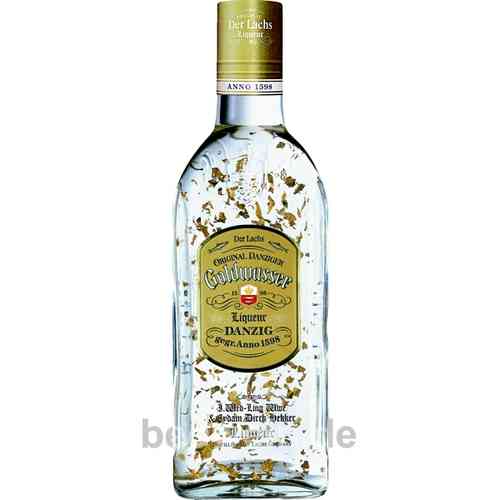
Gold can be used in food.  Gold leaf, flake or dust is used on and in some gourmet foods, notable sweets and drinks as a decorative ingredient.  Danziger Goldwasser or Goldschlager is a traditional German herbal liqueur (very good) which contains flakes of gold leaf.


Gold can be manufactured so thin that it appears semi-transparent. It is used in some aircraft cockpit windows for de-icing or anti-icing by passing electricity through it.  The heat produced by the resistance of the gold is enough to prevent ice from forming.

Cloth of Gold or gold cloth is a fabric woven with a gold-wrapped or spun weft referred to as "a spirally sun gold strip".  In most cases, the core yarn is silk wrapped with a band or strip of high content gold.  It has been popular for ecclesiastical use for many centuries.  Under Henry VII of England, its use was reserved for royalty and higher levels of nobility.  It is also used today by companies such as Charvet for neckwear.  Producers of cloth of gold include the Byzantine Empire and Medieval Italian weavers, particularly in Genoa, Venice and Lucca. A similar cloth of silver was also made.  Most modern metallic fabrics made in the West are known as lame.

Cloth of Gold is still being manufactured in Venice by Tessitura Luigi Bevilacqua (www.luigi-bevilacqua.com).  The gold cloth is a luxury fabric for furnishing and clothing (very heavy), made by interlacing silk and golden or silver threads.  In 2012 they made a dress for Dolce & Gabbana which also included Bevilacqua's Italian velvet.


Books mentioned at the Zoom meeting Tuesday Feb. 9


Jeanette

'I have chosen Birds as my theme for the accordion book.  I will chose a different coloured bird for each page.  I haven't decided yet how many pages I will create but I am hoping I will know when I am done.  I chose Red for my first page and the bird featured is a Red Macaw.'


Linda

Linda is keeping busy and warm I hope!  Here are some of her art cards.  


Just in time for Valentine's Day!


Cathy


These are my two gold pages.  I started out doing my art signature using gold embroidery thread, but ran out of thread.  Just as well because it was terrible to work with, switched to lame and beads.  The second page is the Golden Ratio.


The guild suggested online quilt classes, and I signed up for Lyric Kinard's class Playful Portraiture.  Did not like any of her portrait choices, so selected one off the internet of this lovely interesting lady.


Elisabeth


Wednesday, 13 January 2021

January 2021

Zoom meeting!


It was so lovely to see faces again and have a chance to chat and show work.  We will have another Zoom meeting next month as well.  Hope everyone can make it.


Brigitte was presenting for us this month and she has chosen:


Weaving as a way to create texture


There are many ways to add texture to your textile art: both visual and tactile.  One tactile method is incorporate weaving.  Weaving can be done with strips of fabric, lace, ribbon, Tyvek, raffia, and of course yarn of various thicknesses.  You can work in a single colour and its various tints and shades, a complimentary colour scheme or colours usually associated with a specific culture, eg. Tribal.


Let's try to incorporate some weaving in our project this year.


What you need:


           Various strips of fabric, ribbons, lace, braiding

           Paper backed fusible such as Steam-A-Seam or Wonder Under

           Backing fabric

           Optional: Netting


Cut the backing fabric to the size that you want your finished weaving to be.  I chose several sizes ranging from 8 x 10 to 4 x 6.


Apply paper backed fusible to the background fabric.


Working from left to right, with fusible side facing up, line the fabric strips vertically along the top of the background fabric until covered and pin in place.  These strips act as the warp.


Starting horizontally at the first row, weave a fabric strip over and under to create the first weft row.  Pin in place.


Continue till the background fabric is covered.


Finish by pressing the weave to the background fabric to stabilize and hold everything in place.  Now how about adding some stitching?  I'll challenge you to pick some fancy stitches from your machine to add to your weaving, or if you are a hand stitcher, some fancy embroidery.


This is a plain weave.  By changing the way the weft strips are woven you can create patterning as well.


For example this is  twill weave pattern.


Jeanette

Eucalyptus Deglupta is the third (and maybe last) picture in my "colours in the natural world" series. It is also known as the Rainbow Eucalyptus. It is native to the Philippines, Indonesia and Papua New Guinea.
  
It has smooth, orange-tinted bark that sheds in strips, revealing streaks of pale green, red, orange, grey and purplish brown. I took artistic license and added some other colours in my picture. 

Please look it up online. It is really amazing.


Cathy

So weavings....tried working with wool, and it was just too thick to work properly within the accordion book.  So that lead to working with fabric strips and the end result of 'peach weevils', followed by the use of embroidery thread to create rock weavings.


Cath

I had the good luck to find a piece of fabric I had already woven and hadn't used.  I cut out flower petals and then added a black rose bead to the centre of one.  Just have to reuse things when you can!


Judith


I tried weaving with fusible ribbons but they were too flimsy to work.  So I cut 1/4 strips and wove those.   


They look good, Judith.  Interesting to see where you go from here.


Elisabeth sent pictures of what has been keeping her busy this winter!


                                                              Christmas cards


                                      Cloth bags for the Community Arts Centre sale


                                             Diving for Cover  - a sun printed fish


                                                    Pages for the accordion book


July at Shirley's

This month we had our meeting at Shirley W's so we could play with messy things! The blog this month is courtesy of Linda W.  I was away...